
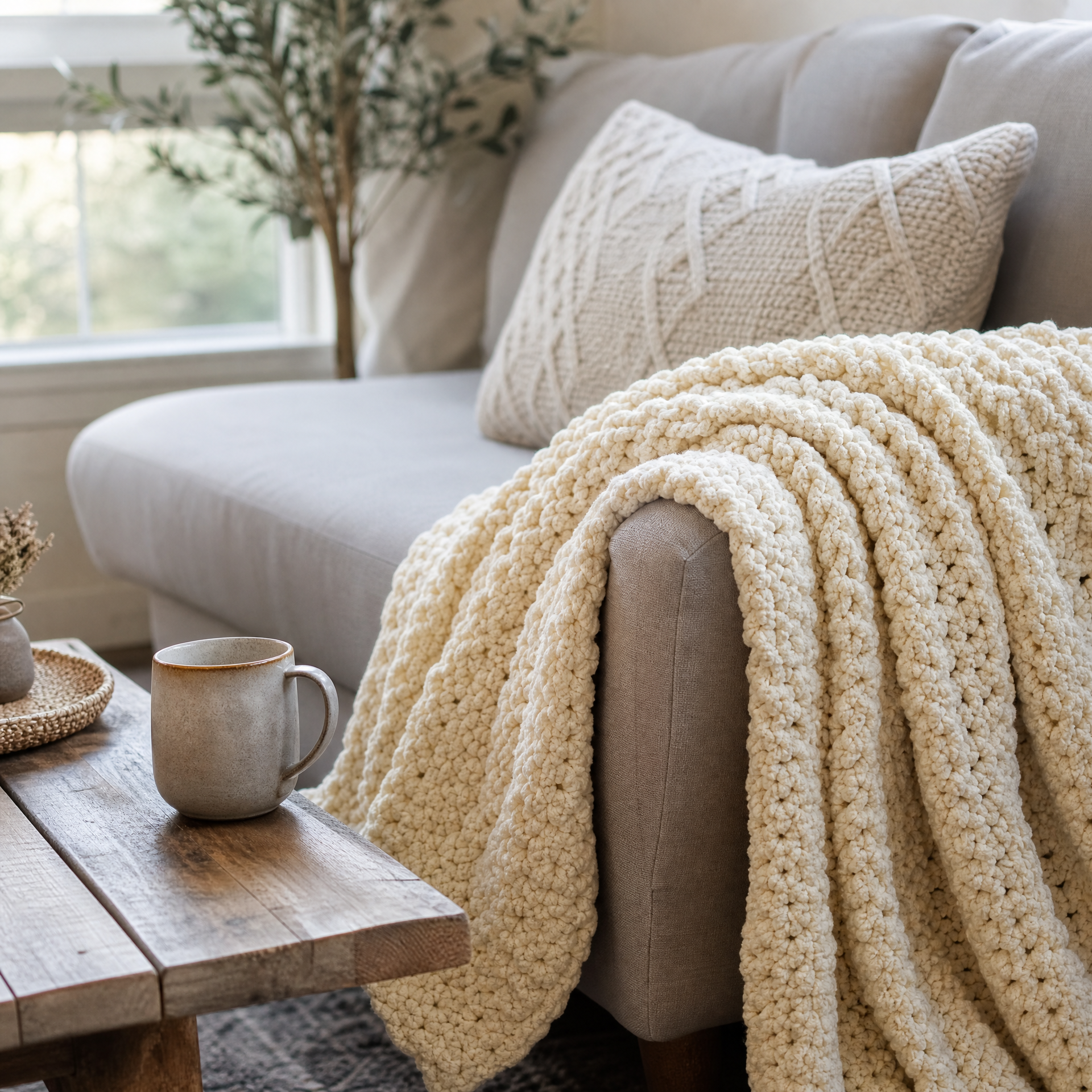
There is something almost magical about picking up a skein of Bernat Blanket Yarn for the first time. It is thick, impossibly soft, and it practically whispers “couch blanket” the moment you touch it. I made my very first chunky blanket about six years ago after spotting a similar one at a boutique for an eye-watering price, and I thought, I can make that. Spoiler: I absolutely could, and so can you. I have made this specific pattern more times than I can count, in about a dozen different colorways, for housewarming gifts, baby showers, and honestly just for myself because my couch always needs another blanket. I have also made my fair share of mistakes along the way, including one memorable incident where I lost count mid-row and ended up with a very lopsided trapezoid. I will share all of that with you today so your blanket turns out beautifully the first time.
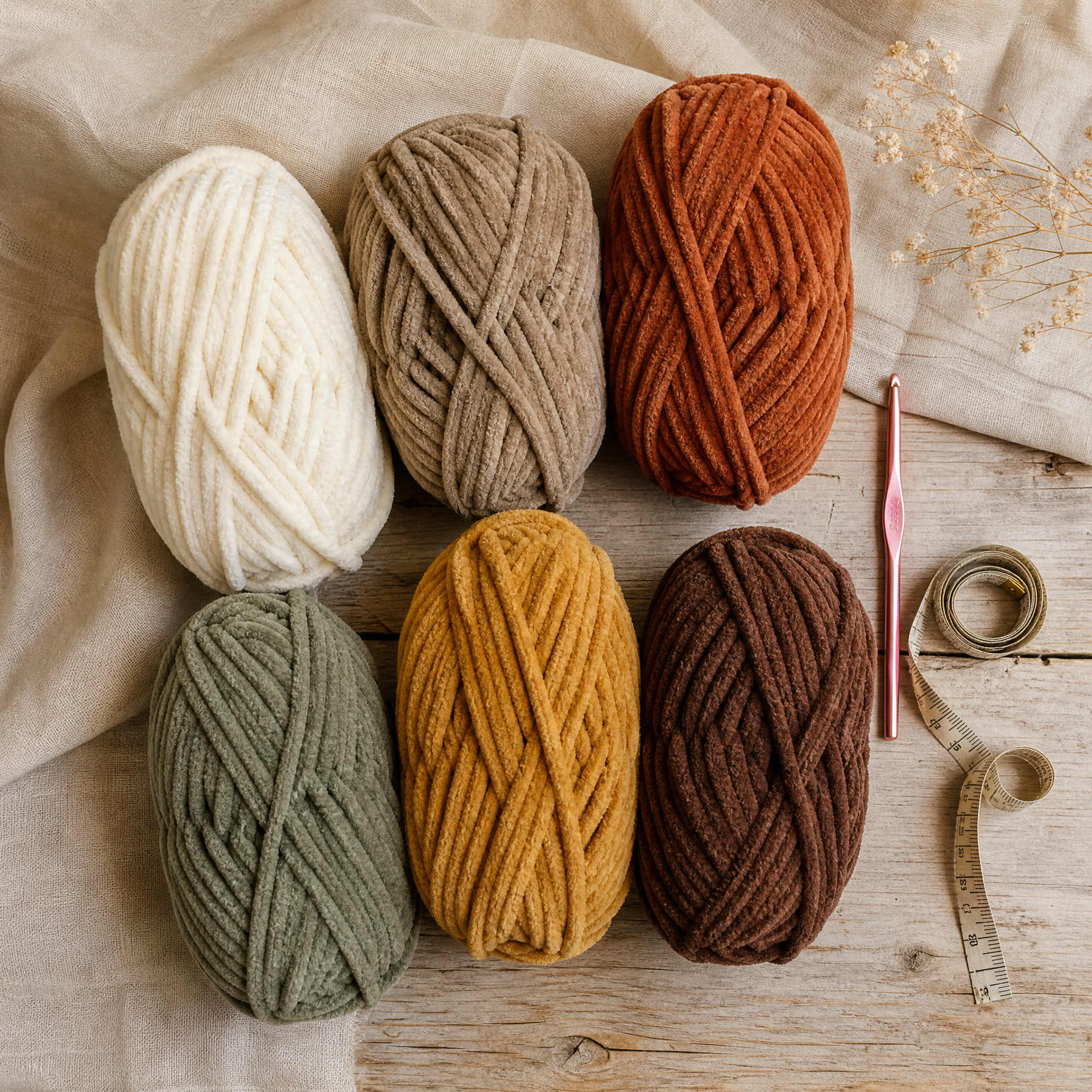
Photo prompt: Flat-lay of Bernat Blanket Yarn skeins in neutral and warm tones arranged on a light wood surface next to a size N/P crochet hook and a small measuring tape.
What You’ll Need
Skill Level: Beginner. If you can chain and work a half double crochet, you have everything you need. If you are brand new to reading patterns, check out my guide on how to read a crochet pattern before you dive in.
Finished Size: Approximately 50 inches wide by 60 inches long (a generous throw size). See the Variations section for adjusting to other sizes.
Materials:
- Bernat Blanket Yarn (300g/10.5 oz skeins, 220 yards each), super bulky weight (6): 4 skeins for the throw size listed above. I used the colorway “Vintage White” for the sample shown, but any solid or ombre colorway works.
- US Size N/P (9mm) crochet hook. I personally reach for my Clover Amour in this size every time.
- Scissors
- Yarn needle for weaving in ends
- Stitch markers (optional but helpful)
Gauge: 8 hdc x 6 rows = 4 inches in the main stitch pattern. Gauge is not critical for a blanket, but checking it will help you predict your final size accurately. Swatch with your actual hook and yarn before starting if sizing matters to you.
Abbreviations
| Abbreviation | US Term |
|---|---|
| ch | chain |
| hdc | half double crochet |
| st(s) | stitch(es) |
| sp | space |
| RS | right side |
| WS | wrong side |
| rep | repeat |
| sk | skip |
| sl st | slip stitch |
| t-ch | turning chain |
Pattern Notes
- This blanket is worked flat, back and forth in rows. There are no rounds.
- The turning chain at the beginning of each row counts as the first hdc. This is important for keeping your stitch count correct.
- Always work the last hdc of each row into the top of the turning chain from the previous row. This is the stitch most beginners miss, and it is the one that caused my trapezoid disaster.
- Bernat Blanket Yarn has a slight fuzz that can make it tricky to see your stitches at first. Work in good lighting and do not rush. I keep a small flashlight on my end table for evening couch crocheting.
- Joining new skeins: Join at the beginning of a row whenever possible. Leave a 6-inch tail, and weave in ends securely with your yarn needle going in multiple directions, since the yarn is bulky and can work loose over time.
- Bernat Blanket Yarn is machine washable on a gentle cycle and tumble dry low. This makes it a fantastic gift yarn.
The Pattern: Step by Step
This blanket uses a simple textured half double crochet stitch worked through the back loop only on every right-side row, which creates a subtle ribbed texture that looks beautiful and is still very beginner friendly.
Foundation Chain
Chain 102. (This gives you 100 working stitches plus 2 for your first turning chain.)
Row 1 (WS)
Hdc in the 3rd chain from the hook (the skipped chains count as your first hdc). Hdc in each chain across. Total: 101 hdc. Ch 2, turn.
Row 2 (RS, Back Loop Only Row)
Working in the back loop only (BLO) of each stitch, hdc in the first st (this is the second stitch from your hook, since the ch-2 counts as your first hdc). Hdc BLO in each st across. Hdc BLO in the top of the t-ch. Total: 101 hdc. Ch 2, turn.
Row 3 (WS, Both Loops)
Hdc in both loops of each stitch across, including the top of the t-ch. Total: 101 hdc. Ch 2, turn.
Rows 4 through 90
Rep Rows 2 and 3 alternately. You will have 90 rows total when finished, creating approximately 60 inches of length. At the end of Row 90, do not ch 2. Fasten off and weave in all ends.
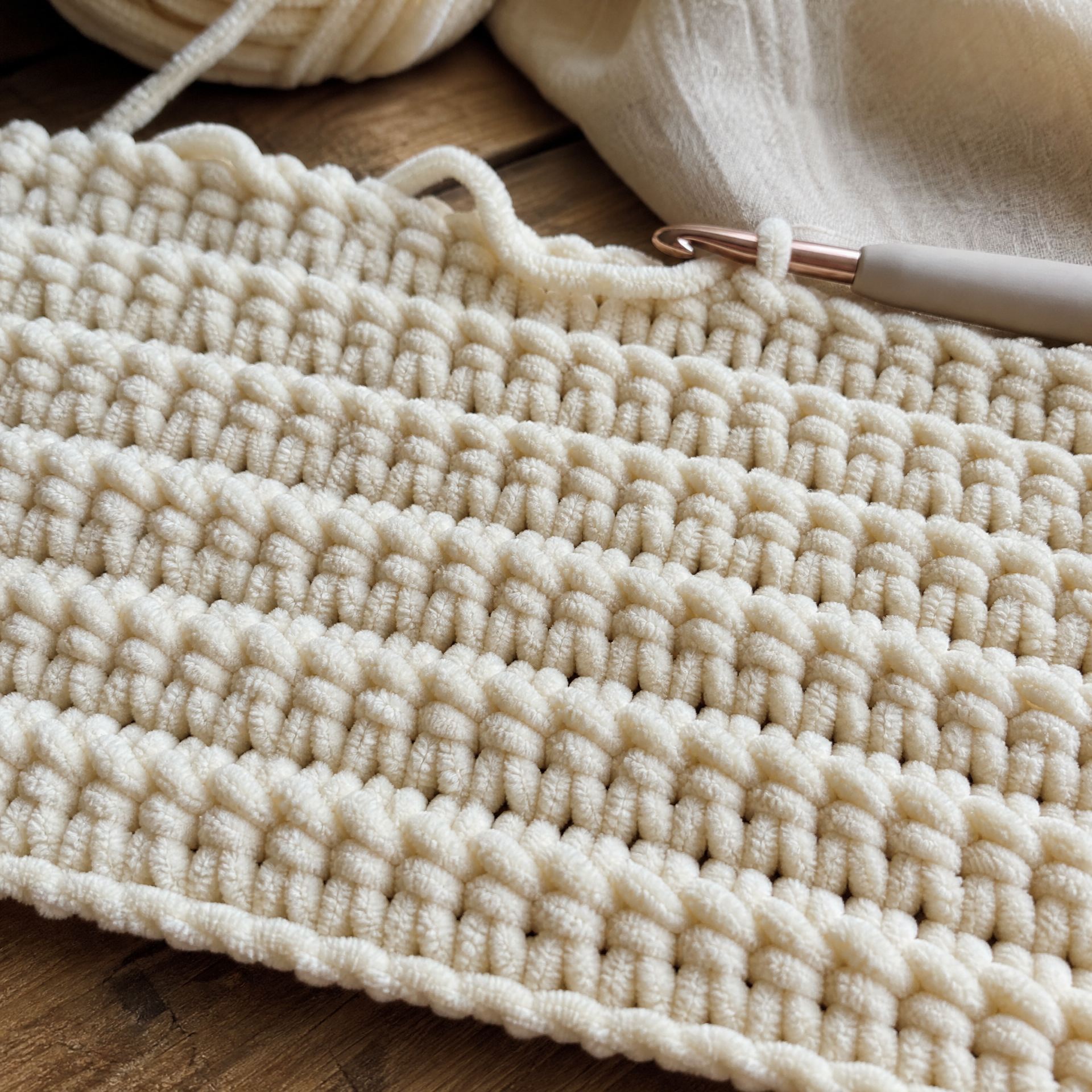
Photo prompt: Close-up macro shot of the chunky half double crochet back-loop-only texture in cream Bernat Blanket Yarn, showing the ridged stitch pattern mid-blanket on a crochet hook, laid flat on a wooden surface.
Optional Border
A simple single crochet border cleans up the edges beautifully. With RS facing, join yarn at any corner. Work 3 sc in the corner stitch, sc evenly around the entire blanket working 1 sc per row end along the sides and 1 sc per stitch along the top and bottom edges. Work 3 sc in each remaining corner. Join with a sl st to the first sc. Fasten off and weave in ends. I add this border to almost every blanket I make. It takes maybe 20 minutes and makes the whole thing look polished and intentional.
My Experience and Practical Tips
Okay, let me be real with you for a minute. The first time I made this blanket, I did not count my stitches at the end of every row. I thought I could eyeball it. I was wrong. By row 30, I had 97 stitches instead of 101, and the blanket had a noticeable lean to one side. If you are prone to the same kind of optimistic laziness I am, place a stitch marker at both ends of every tenth row. It takes two seconds and saves you a lot of heartache later.
Another thing I learned the hard way: not all Bernat Blanket Yarn colorways are equally forgiving. The ombre and print colorways are gorgeous, but the color changes can make it genuinely hard to see where your stitches are. If this is your first time with this yarn, start with a solid color. Vintage White, Taupe, or the beautiful “Misty Gray” are all great choices for first-timers. If you are wondering about other beginner-friendly yarn options beyond Bernat, my post on best yarn for beginners breaks down everything I actually use and recommend.
On hook size: the pattern calls for a 9mm hook, which is what Bernat recommends. I have also made this with a 10mm hook when I wanted a slightly airier, drapier fabric. Both work beautifully. The 10mm version uses slightly more yarn, so grab an extra skein if you size up.
For storing your work in progress, I keep my blanket in a large cotton tote bag. Plastic bags can cause the yarn to pill. Also, keep it away from pets. I learned this one after my cat Biscuit decided a half-finished blanket looked like a perfect napping spot. The pulled stitches were not ideal.
Variations and Custom Sizing
One of the best things about this pattern is how easy it is to scale. The stitch math is simple: your foundation chain should be an even number plus 2. Here is a quick reference guide:
- Baby blanket (30 x 36 inches): Chain 62 (60 working stitches). Work 54 rows. Uses approximately 2 skeins. For a dedicated baby blanket pattern with more detail, see my easy crochet baby blanket pattern for beginners.
- Lap blanket (40 x 50 inches): Chain 82 (80 working stitches). Work 75 rows. Uses approximately 3 skeins.
- Throw (50 x 60 inches): The pattern as written. 4 skeins.
- Full/Queen bed runner (60 x 72 inches): Chain 122 (120 working stitches). Work 108 rows. Uses approximately 6 skeins.
You can also change the texture easily. For a totally smooth fabric, simply work both loops in every row and skip the BLO rows entirely. For a more pronounced waffle texture, try working front loop only on RS rows and back loop only on WS rows. I have a whole notebook of texture experiments using this same basic structure.
Color-wise, you can do stripes by switching colors at the beginning of a new row. Two-row stripes using two different solid Bernat Blanket Yarn colors look incredibly cozy and are a perfect stash-buster project.
FAQ
How long does this chunky crochet blanket take to make?
For an average crocheter, this throw-size blanket takes somewhere between 8 and 12 hours of actual crocheting time. I can finish it in about two evenings spread over a weekend if I am watching a show. Because the yarn is so thick and the stitches work up quickly, it is a very satisfying project that never feels like it is dragging on forever.
Can I use a different brand of super bulky yarn instead of Bernat Blanket Yarn?
Yes, absolutely. Any super bulky (weight 6) yarn will work with this pattern. Loops and Threads Cozy Wool, Lion Brand Thick and Quick, and Premier Yarns Basix Chunky are all popular substitutes. Just check that your gauge matches before you commit to yardage, since different brands can vary quite a bit in how tightly they are spun.
My stitch count keeps changing from row to row. What am I doing wrong?
This is the most common issue with this pattern, and I have been there. The two culprits are almost always the same: either you are not working into the turning chain at the end of the row (which causes you to lose a stitch), or you are accidentally working into the space between stitches instead of the stitch itself. Slow down on the first and last two stitches of every row and make sure your hook is going cleanly into the correct stitch. Stitch markers on the turning chain at the end of each row help a lot.
How do I wash and care for this blanket?
Bernat Blanket Yarn is machine washable, which is one of my favorite things about it. Turn the blanket inside out, place it in a mesh laundry bag, and wash on a gentle or delicate cycle in cold water. Tumble dry on low heat. Avoid high heat, which can cause the polyester fibers to pill. I also skip fabric softener since it can break down the fibers over time and reduce that iconic softness.
Is this pattern suitable for a complete beginner?
Yes, this is genuinely one of the most beginner-friendly patterns I have on the site. You only need to know how to chain and work a half double crochet. The back-loop-only row sounds intimidating but it just means inserting your hook into the back bump of the stitch instead of both loops. After one or two rows it becomes completely automatic. If you are nervous about making mistakes along the way, my post on 10 crochet mistakes I made as a beginner might give you some reassurance and practical fixes.
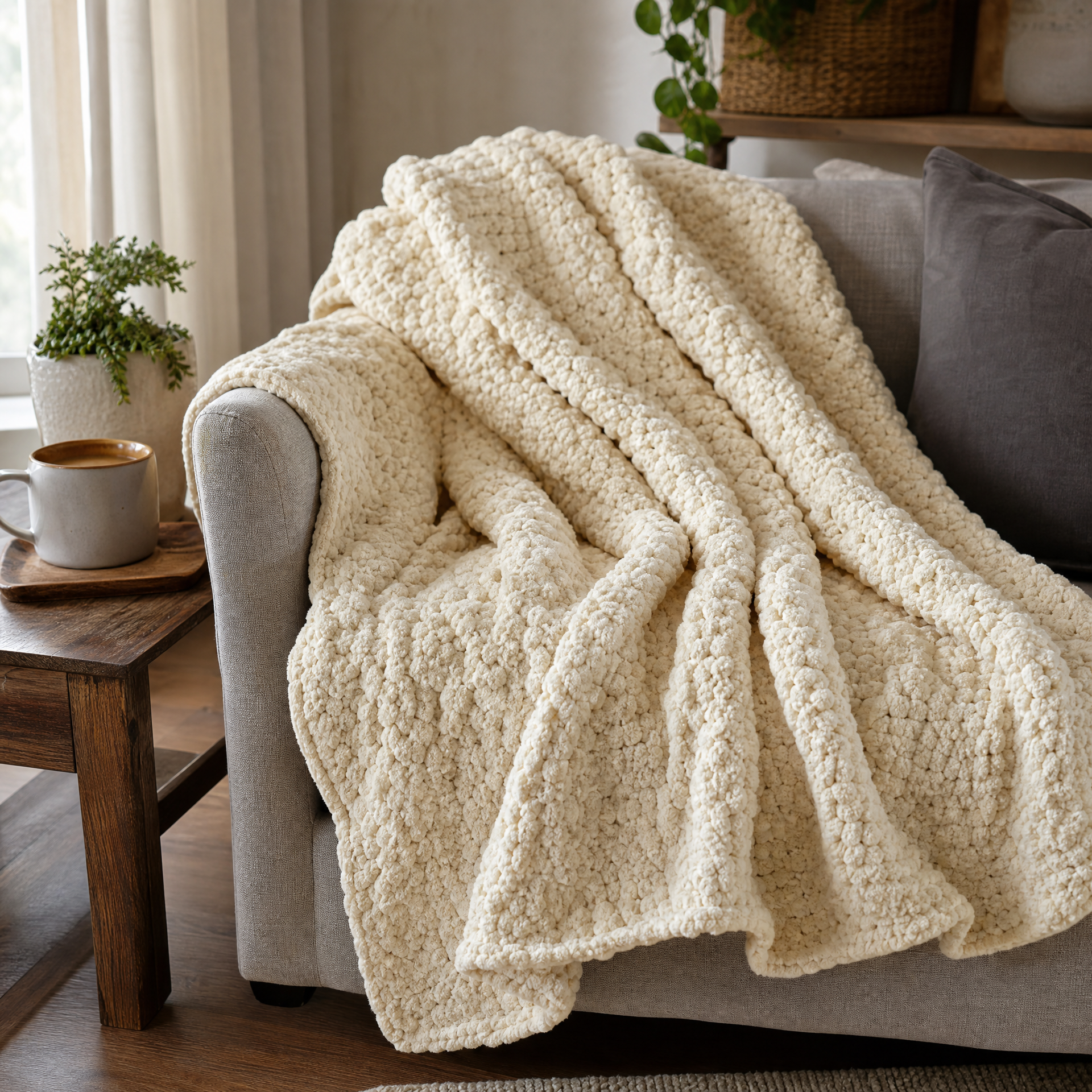
Photo prompt: Finished chunky crochet blanket in cream Bernat Blanket Yarn draped casually over a light gray linen sofa with a ceramic mug of coffee and a small potted plant on a side table, cozy living room setting, warm natural light.
Final Thoughts
This chunky crochet blanket has been one of my most-gifted, most-requested, and most-personally-used patterns for years. It is the project I recommend to every single person who asks me where to start with crochet, because it works up fast, the materials feel luxurious, and the finished result genuinely looks like something you would find in a home decor boutique. That combination of accessibility and visual payoff is hard to beat.
I hope you love making this as much as I do. Whether you are making it for yourself, as a gift, or as your first ever crochet project, I am rooting for you every stitch of the way. When you finish yours, I would absolutely love to hear about it in the comments below. What colorway did you choose? Did you add the border? Did your cat also try to help? Drop a comment and let me know.
And if you found this pattern helpful, please save it to your crochet Pinterest board so you can find it again later (and maybe share it with a friend who has been eyeing your blanket). Happy crocheting!