
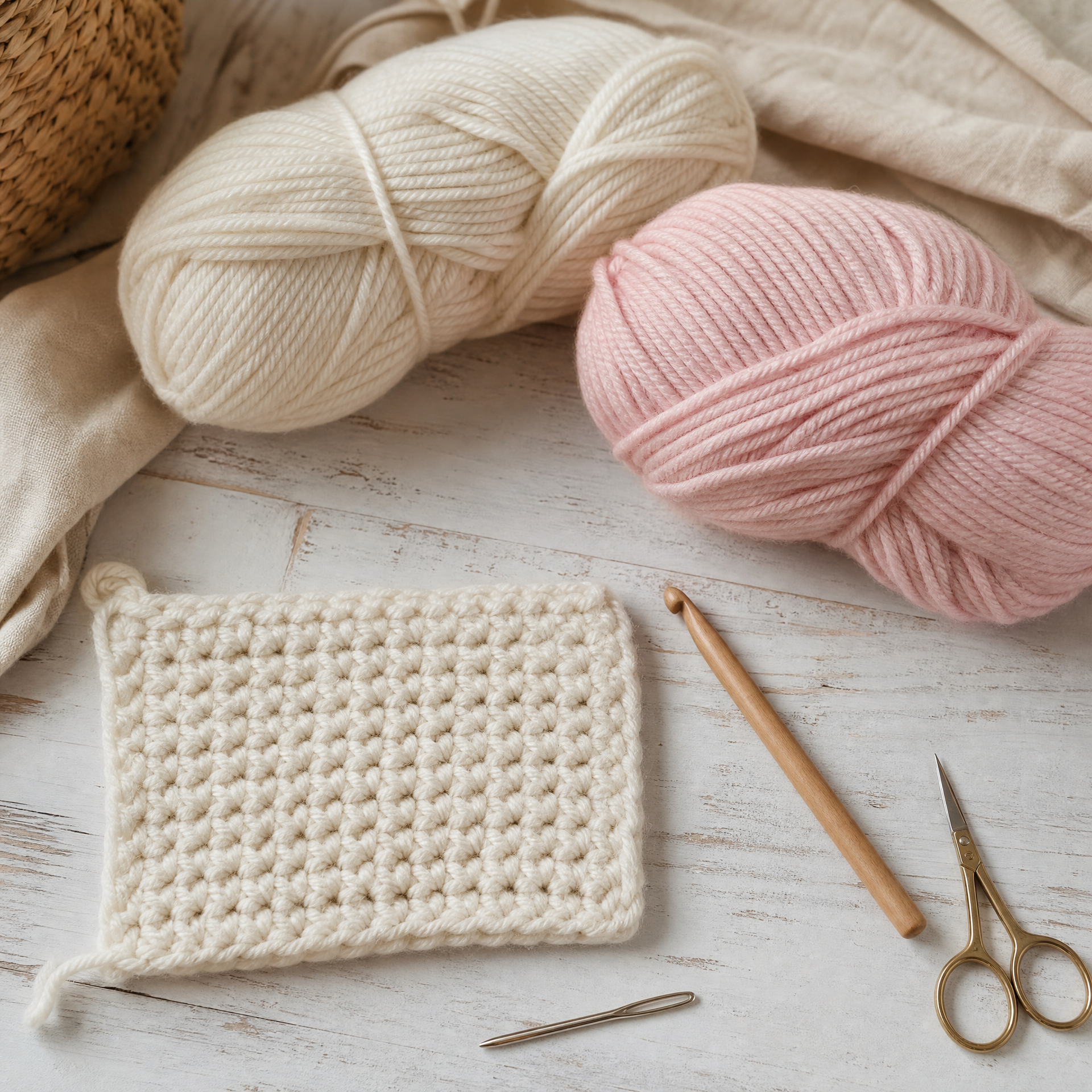
When I first started crocheting, I grabbed whatever yarn was on sale at my local craft store — and honestly, it was a disaster. The yarn split every other stitch, the color was so dark I couldn’t see what I was doing, and I frogged that first project about four times before I gave up entirely for two weeks. Sound familiar? I’ve been running Crochet at Home for a few years now, and the number one question I still get from brand-new crocheters is: what yarn should I actually buy? It seems simple, but it genuinely makes or breaks your beginner experience. I’ve tested a lot of yarns over the years — some were gifted, some I bought with my own money, and some I wish I’d never touched. Today I’m breaking down exactly what I reach for when I’m teaching someone to crochet for the very first time, and why each pick makes learning so much easier.
What You’ll Need
This article is written as a yarn guide rather than a single project pattern, but I’ve included a sample beginner swatch project so you can put these yarn recommendations to work right away. Think of it as your yarn test drive!
- Skill Level: Absolute Beginner
- Finished Size: Approximately 6″ x 6″ swatch (perfect for practicing tension)
- Materials:
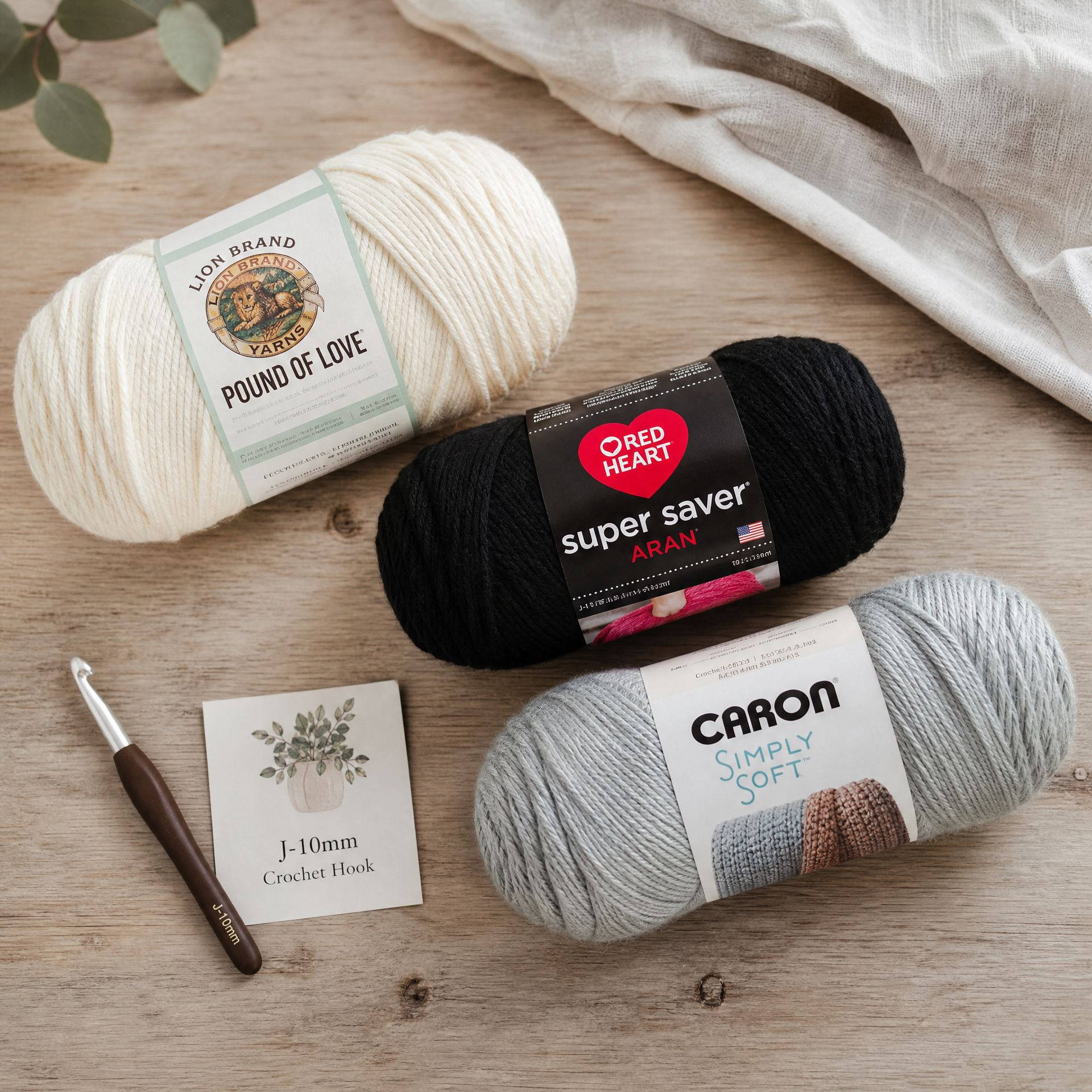
- 1 skein Lion Brand Yarn Pound of Love in a light/medium color (4 – Medium weight)
- OR 1 skein Red Heart Super Saver in Aran or Soft White
- US Size J-10 (6.0 mm) crochet hook
- Scissors
- Yarn needle for weaving in ends
- Stitch markers (optional but helpful)
- Gauge: 13 sc x 14 rows = 4″ x 4″ in single crochet (gauge is not critical for a practice swatch, but good to track)
Abbreviations
| Abbreviation | US Term |
|---|---|
| ch | chain |
| sc | single crochet |
| hdc | half double crochet |
| dc | double crochet |
| st(s) | stitch(es) |
| sk | skip |
| sl st | slip stitch |
| rep | repeat |
| RS | right side |
| t-ch | turning chain |
Pattern Notes
- This swatch uses rows (worked flat), not rounds.
- A turning chain of 1 is used for sc rows and counts as a regular stitch only when specified. For this swatch, the turning chain does not count as a stitch — this is the approach I recommend for beginners because it reduces confusion.
- Always insert your hook under both loops of each stitch unless told otherwise.
- When you finish, this swatch can become a coaster, a dishcloth, or just a keepsake from your very first practice session. I still have mine tucked in a drawer!
- If you need help understanding how patterns are written before you begin, check out my guide on how to read a crochet pattern as a beginner — it walks you through everything from the abbreviations table to the stitch counts.
The Pattern: Step by Step
Foundation Chain: Ch 21.
Row 1 (RS): Sc in the 2nd ch from hook and in each ch across. [20 sc]
Row 2: Ch 1, turn. Sc in each st across. [20 sc]
Rows 3–20: Rep Row 2. [20 sc each row]
At the end of Row 20, fasten off and leave a 6″ tail for weaving in.
Finishing: Using your yarn needle, weave in both ends securely. I weave in at least 4–5 directions to make sure nothing unravels. Give your swatch a gentle tug in all directions — if your ends hold, you’re golden.
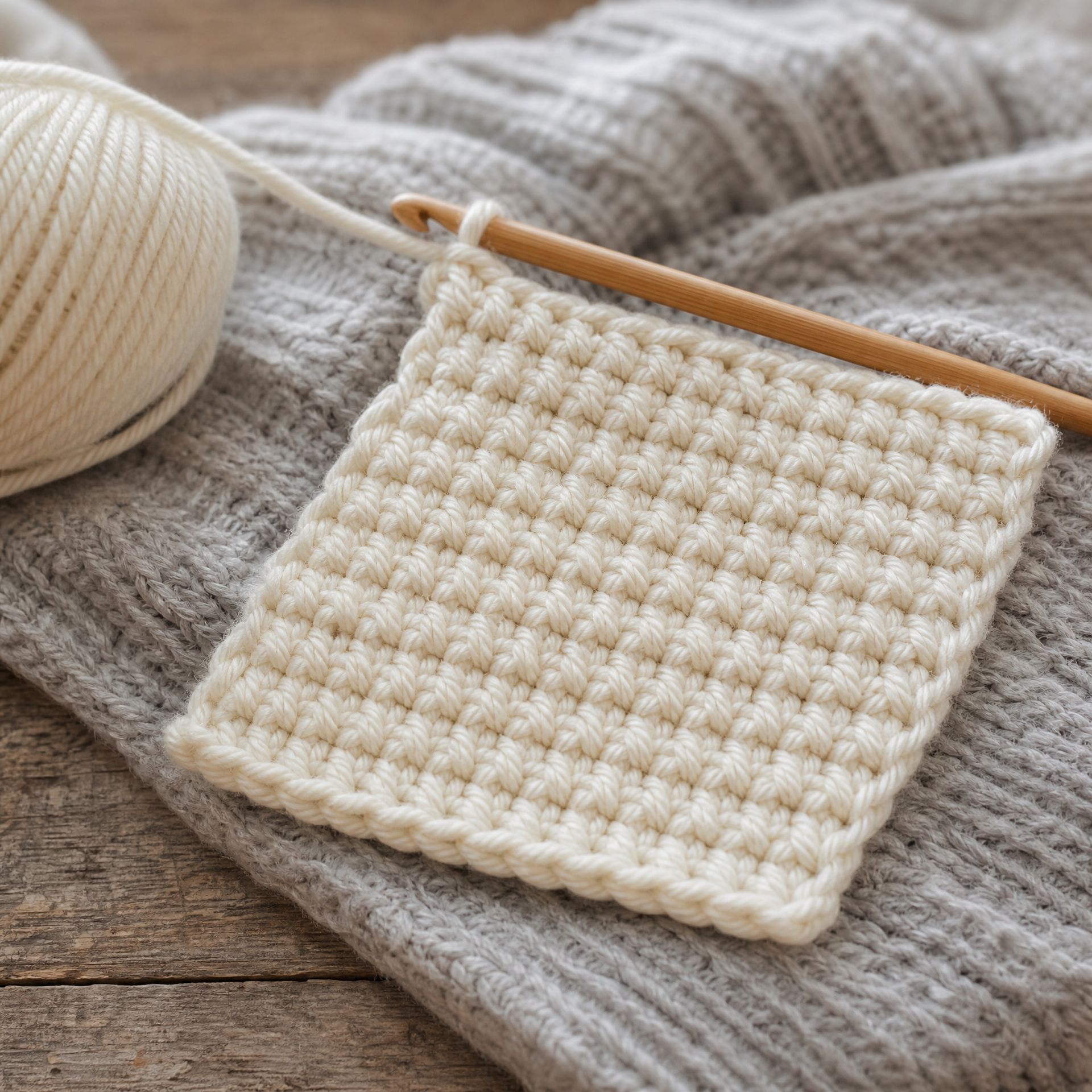
Optional Edging: If you want to practice a new stitch, do one round of sc around the entire swatch. Join with a sl st to the first sc. Fasten off and weave in ends. This is a great way to neaten up the edges and get comfortable working into the side of rows.
My Experience & Practical Tips
Okay, let’s talk yarn. Here are the yarns I actually keep stocked in my craft room for beginner projects and what I love (and don’t love) about each one.
Lion Brand Pound of Love
This is genuinely my number one recommendation for beginners. It’s a worsted weight (size 4) acrylic that is smooth, consistent, and forgiving. The stitches are easy to see — which sounds minor but is everything when you’re learning. The fact that it comes in a huge 16 oz skein means you won’t run out halfway through a project, and the price per yard is fantastic. I’ve made dishcloths, baby blankets, and hats with this yarn, and it always works up beautifully. My only tip: stick to lighter colors like cream, pale yellow, or light gray when you’re just starting out. Dark colors hide your stitches and make it nearly impossible to count.
Red Heart Super Saver
The classic. Red Heart Super Saver is widely available, affordable, and comes in about a million colors. It’s slightly stiffer than Pound of Love, which can actually help beginners because the fabric holds its shape more and the stitches stay open. I made my very first granny square with Red Heart, and while my tension was all over the place, I could at least see what I was doing. If you want to try a fun next step after your swatch, my simple granny square coasters pattern works perfectly with this yarn.
Caron Simply Soft
Once you’ve got a few projects under your belt and want something a little more luxurious feeling, Caron Simply Soft is a beautiful step up. It’s still acrylic (so it’s machine washable), but it has a silkier drape that makes finished items look really polished. I will warn you: it’s a tiny bit more slippery than the other two, so if you’re still working on tension, give yourself a project or two first.
What I Avoid for Beginners
Fluffy or fuzzy yarns (like eyelash yarn or mohair blends) — I made this mistake myself and spent an entire evening trying to rip out three rows. You simply cannot see the stitches. Also avoid very thin yarns (lace or fingering weight) or very chunky yarns (size 6+) until you understand how hook size and yarn weight relate to each other. And dark navy or black? Just trust me and set those aside for later.
Variations & Custom Sizing
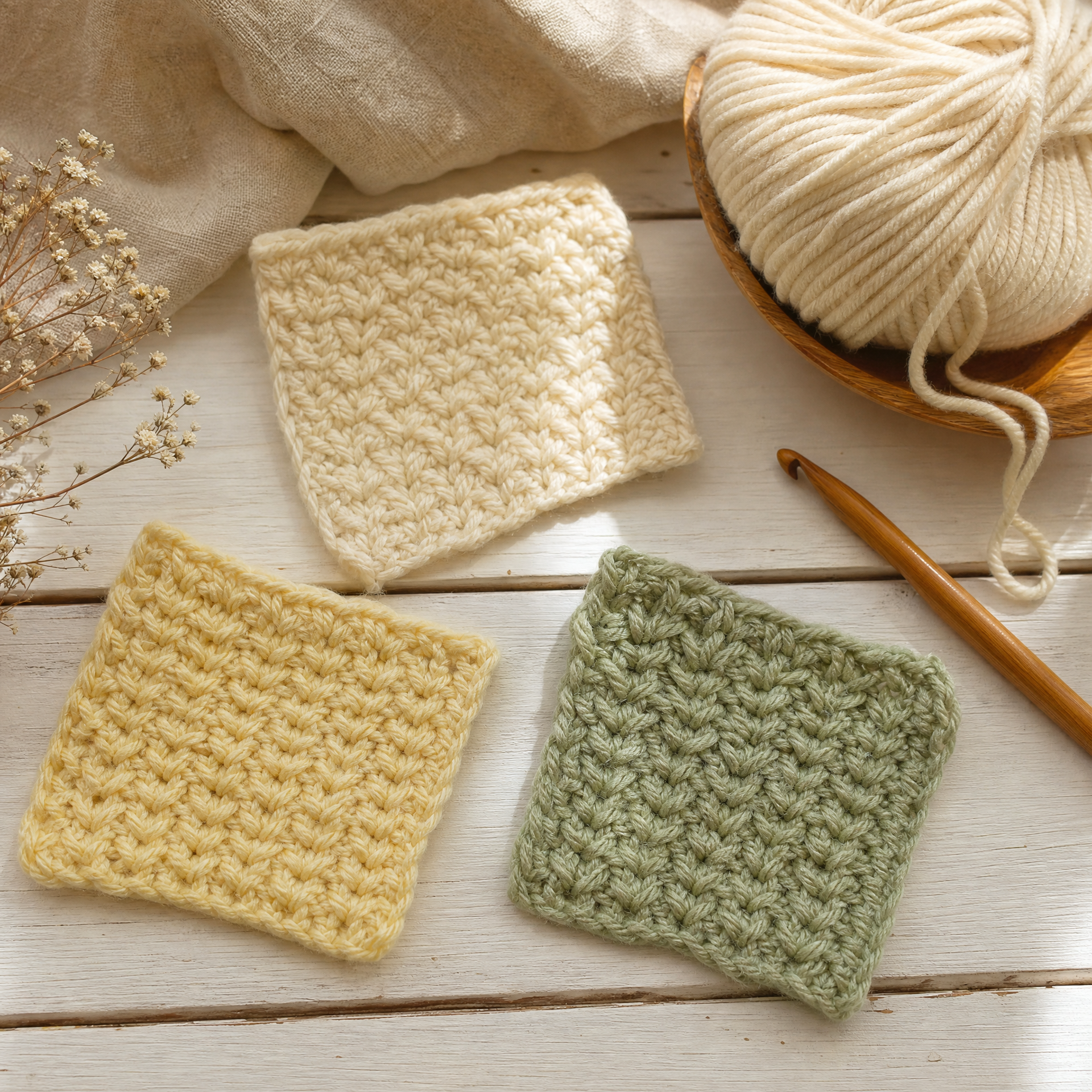
Once you’re comfortable with your basic swatch and you’ve found your favorite yarn, there are so many directions to go. Here are a few ideas based on what I’ve done myself:
- Make it bigger: Chain 41 instead of 21 and work 40 rows instead of 20 for a generous dishcloth. Same yarn, same hook — just more of it.
- Try a different stitch: Swap out single crochet for half double crochet in Row 2 onward. You’ll notice the fabric gets taller and has a slightly different texture. This is a great low-stakes way to learn a new stitch.
- Graduate to a project: If you’re ready for your first real make, my easy crochet headband for beginners uses the same worsted weight yarn and a simple stitch repeat that works up in under an hour.
- Go big with a blanket: Lion Brand Pound of Love is especially popular for baby blankets. Chain 100 and work until your skein runs out — it’s that simple and genuinely satisfying.
- Change your hook size: Try the same yarn with a smaller hook (like an I-9/5.5 mm) for a tighter, denser fabric, or a larger hook (K-10.5/6.5 mm) for a looser, drapier result. This is how you learn to understand gauge intuitively.
FAQ
Is acrylic yarn really okay for beginners, or should I use cotton?
Acrylic is absolutely my top choice for beginners, and I’ll defend that with zero apologies. It’s forgiving, stretchy, easy to frog (rip out), machine washable, and affordable. Cotton is wonderful for dishcloths and hot pads, but it has no stretch, which makes it harder to work with when you’re still figuring out tension. Start with acrylic, then explore cotton once you’ve built some confidence.
What weight of yarn is best for a beginner?
Worsted weight (size 4, also labeled “medium”) is the sweet spot. It’s substantial enough that you can see your stitches clearly, but not so chunky that you lose detail. It pairs beautifully with a J-10 (6.0 mm) hook, which is also a comfortable size for most hands. This is where I started, and it’s where I send every new crocheter.
Can I use cheap dollar store yarn?
I’ve tried it — and honestly, it depends. Some dollar store yarns are surprisingly decent. Others split like crazy, break mid-project, or pill almost immediately. If budget is a concern (totally valid!), I’d suggest Red Heart Super Saver or Lion Brand Pound of Love from a craft store during a sale or with a coupon before going the dollar store route. Your beginner experience will be significantly smoother.
How much yarn do I need as a beginner?
For a practice swatch like the one in this article, you’ll barely make a dent in a single skein. For a first real project — like a headband, a small pouch, or a coaster set — one skein of worsted weight is usually plenty. I always suggest buying one extra skein of whatever color you choose, just in case. Running out of yarn mid-project and not being able to find the same dye lot is a beginner heartbreak I wouldn’t wish on anyone.
What if my stitches look uneven? Is that a yarn problem?
Probably not! Uneven tension is almost always a technique issue, not a yarn issue — and it’s completely normal for beginners. I had tension problems for months. The good news is that smooth, consistent yarns like the ones I’ve recommended actually help you see the unevenness so you can correct it. If you’re making a lot of common beginner errors, I have a whole post on 10 crochet mistakes I made as a beginner and how to fix them that might be exactly what you need right now.
Final Thoughts
Choosing the right yarn as a beginner is genuinely one of the most impactful things you can do for your crochet journey. I wish someone had sat me down and told me to put down the dark, splitty, bargain bin yarn and just grab a skein of Pound of Love from the start. It would have saved me so many frustrated evenings and a lot of frogged projects. The good news is that you now have that information — and a little practice swatch to get you started.
Start light, start smooth, and start with a hook that feels comfortable in your hand. Everything else comes with time and repetition. Crochet is one of those skills that genuinely snowballs — each project teaches you something the last one didn’t, and before long you’ll be the one giving yarn advice to a friend who’s just starting out.
I’d love to hear from you! Drop a comment below and let me know: what was the first yarn you ever used, and would you recommend it to a beginner? And if this post helped you out, please save it to your crochet board on Pinterest so you can find it again later — it really does make a difference for this little blog. Happy hooking! 🧶