

I still remember the first time I brought a handmade market bag to the farmers market. It was a Saturday morning, the tomatoes were piled high, and I tossed everything into this stretchy little cotton bag I had finished the night before. The vendor actually stopped me and asked where I bought it. That moment hooked me completely. I have made this market bag pattern more times than I can honestly count, in every color of cotton yarn imaginable, and I have given them away as housewarming gifts, birthday presents, and hostess tokens. The pattern is simple enough that I can work on it while watching TV, but the finished result looks genuinely impressive. Whether you are a confident beginner or an intermediate crocheter looking for a quick, satisfying project, this cotton market bag is going to become one of your go-to makes. Let me walk you through everything you need to know.
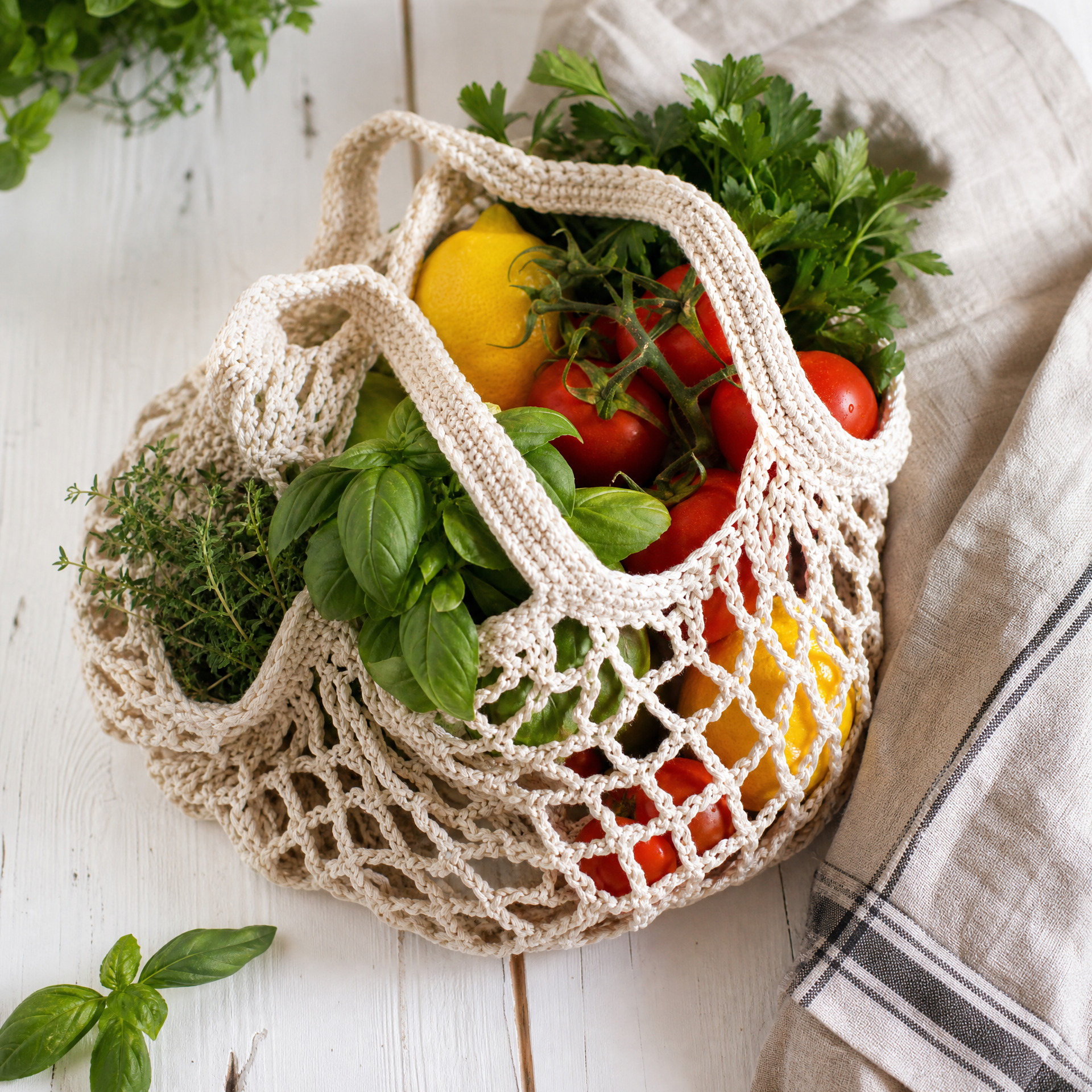
Photo prompt: Flat-lay of a completed natural cotton crochet market bag filled with fresh produce including tomatoes, lemons, and herbs, styled on a white wooden surface with a linen napkin beside it.
What You’ll Need
Skill Level: Easy to Intermediate (comfortable with basic stitches and working in the round)
Finished Size: Approximately 13 inches wide x 15 inches tall (before stretching), with handles measuring about 18 inches long. The mesh design stretches generously to hold a full load of groceries.
Materials:
- 200 to 250 yards of worsted weight (size 4) 100% cotton yarn (I love Lion Brand 24/7 Cotton in Natural or Ecru, but any smooth cotton worsted works great)
- Size 5.0mm (H/8) crochet hook
- Yarn needle for weaving in ends
- Scissors
- Stitch marker (optional but helpful)
Gauge: 13 dc x 8 rows = 4 inches in double crochet. Gauge is not critical for this project, but a tighter gauge will give you a denser bag, and a looser gauge will give you more stretch. If you are new to checking gauge, I have a helpful resource in my post on how to read a crochet pattern that covers this topic in plain language.
Abbreviations
| Abbreviation | US Term |
|---|---|
| ch | chain |
| sl st | slip stitch |
| sc | single crochet |
| dc | double crochet |
| ch-sp | chain space |
| rep | repeat |
| st(s) | stitch(es) |
| rnd | round |
| sk | skip |
| RS | right side |
Pattern Notes
- The bag base is worked flat in rows, then the sides are worked in continuous rounds (or joined rounds) upward from the base.
- The mesh body is created with a simple dc, ch 1, skip pattern that gives the bag its stretchy, open quality.
- Handles are worked as separate chains and slip stitched into place at the end. This gives you full control over handle length.
- Cotton yarn has very little stretch on its own, but the open mesh structure of this bag creates all the flexibility you need.
- I recommend weaving in your ends very securely on a cotton project. Cotton does not grip itself the way wool does, so a few extra passes with your yarn needle will save you from a sad unraveling moment at the checkout line.
- This pattern uses US crochet terminology throughout.
The Pattern: Step by Step
Base of the Bag
Chain 31.
Row 1: Dc in 4th ch from hook, dc in each ch across. Turn. (29 dc)
Rows 2 through 6: Ch 3 (counts as first dc), dc in each st across. Turn. (29 dc each row)
After Row 6, do not fasten off. You will now work around the entire perimeter of the base rectangle to set up the sides.
Setting Up the Sides
Setup Round: Ch 1, sc evenly around the entire base rectangle: 29 sc across the top edge, 6 sc down the short side, 29 sc across the bottom edge, 6 sc up the other short side. Sl st to join to first sc. (70 sc total)
Place a stitch marker at the join point to track the start of your rounds.
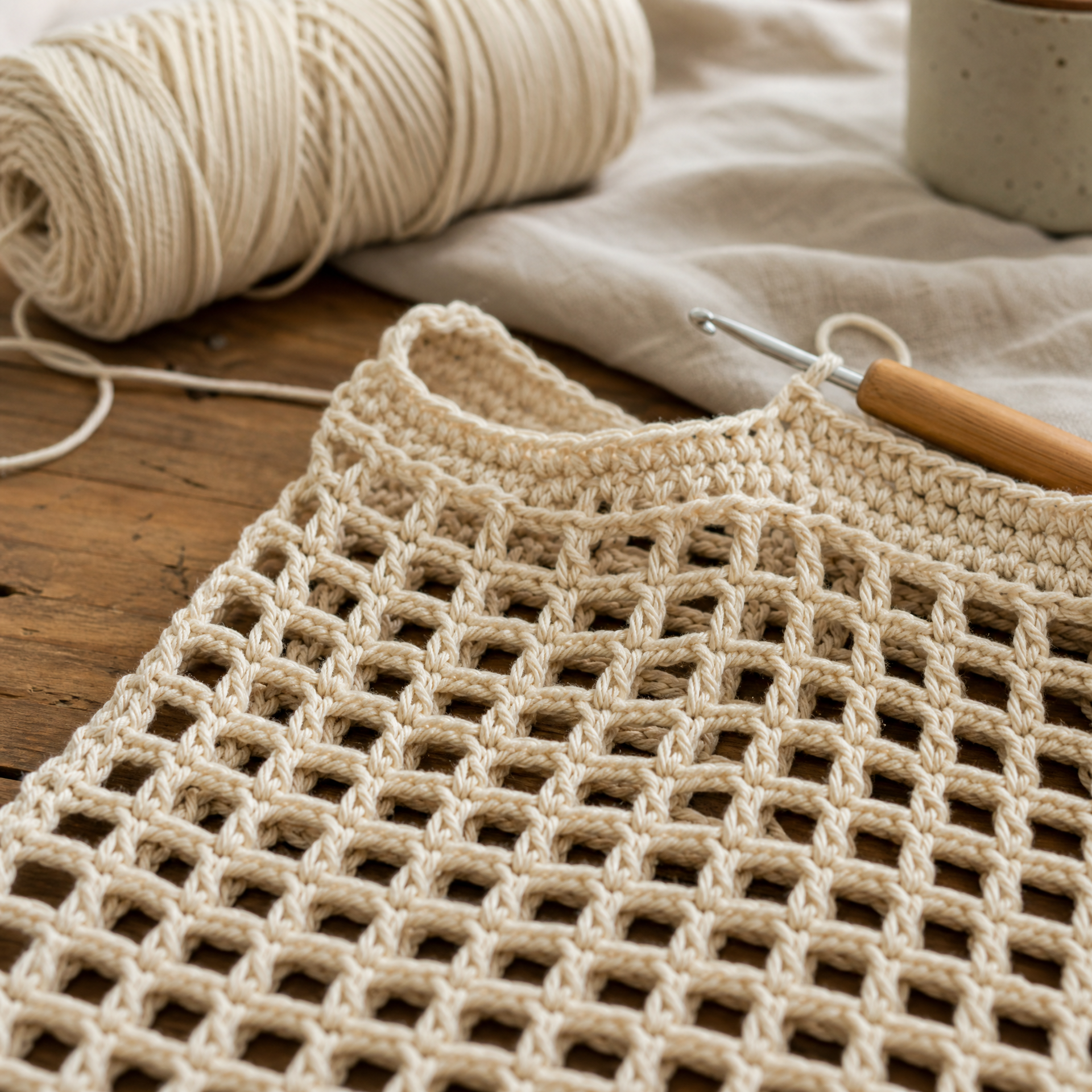
Photo prompt: Close-up of a crochet market bag in progress showing the mesh double crochet and chain-one pattern on a wooden table, with a skein of natural cotton yarn and a 5mm hook visible in the background.
Mesh Body (Rounds 1 through 14)
Round 1: Ch 4 (counts as dc + ch 1), sk next st, (dc in next st, ch 1, sk next st) around. Sl st to 3rd ch of beginning ch-4 to join. (35 ch-1 spaces)
Rounds 2 through 14: Sl st into first ch-sp, ch 4 (counts as dc + ch 1), (dc in next ch-sp, ch 1) around. Sl st to 3rd ch of beginning ch-4 to join. (35 ch-1 spaces each round)
Repeat Round 2 pattern for all 14 rounds total. The bag body should measure approximately 12 to 13 inches tall at this point.
Top Edge
Round 15: Ch 1, sc in each dc and each ch-sp around. Sl st to join. (70 sc)
Round 16: Ch 1, sc in each sc around. Sl st to join. (70 sc)
Fasten off and weave in ends.
Handles (Make 2)
Chain 80 (or adjust length to preference, each chain adds about 0.2 inches).
Row 1: Sc in 2nd ch from hook and in each ch across. Fasten off, leaving a long tail for sewing. (79 sc)
Fold the handle strip in half lengthwise so the edges meet. Using your yarn needle and the long tail, whip stitch the long edges together to create a sturdy, rope-like handle.
Attach each end of a handle to the inside top edge of the bag, approximately 7 stitches from the center front and center back. Use the yarn needle to sew each end securely through several rows of stitching, going back and forth at least 3 times. Repeat for the second handle on the opposite side of the bag.
My Experience and Practical Tips
I have made this bag probably thirty times by now, and I have made almost every mistake you can imagine along the way. Here are the things I wish someone had told me from the start.
Tension matters more than you think. The first time I made this bag, I crocheted the base too tightly and the sides too loosely. The result was a bag that bowed outward like a little barrel. Now I consciously try to keep even tension throughout, and if anything, I go slightly tighter on the mesh rounds so the bag holds its shape when loaded.
Not all cotton is equal. I have used budget cotton from the craft store bin and I have used premium 100% combed cotton, and the difference in drape and durability is real. That said, you do not need to spend a lot. Lion Brand 24/7 Cotton and Paintbox Simply DK Cotton are my two everyday favorites. If you are still figuring out which yarn types work best for your projects, my post on the best yarn for beginners might help you choose with more confidence.
Sew those handles twice. I once gifted a bag where I had been lazy about the handle attachment. The recipient loaded it with apples at the market and one handle pulled loose before she got to the car. Mortifying. Now I always sew each handle end through at least three rows of the bag body and back again, and I knot the tail before weaving it in.
Block it flat after washing. Cotton bags can get a little wonky after their first wash. I wet-block mine by soaking in cool water, squeezing out the excess (never wringing), and laying flat to dry. The mesh opens up beautifully and the bag looks polished and intentional.
Cotton is washable and that matters. This is a bag that goes to the market, gets loaded with produce, and sometimes gets a bit grubby. The cotton washes up perfectly in cold water on a gentle cycle. I have bags that are two years old and still look fresh.
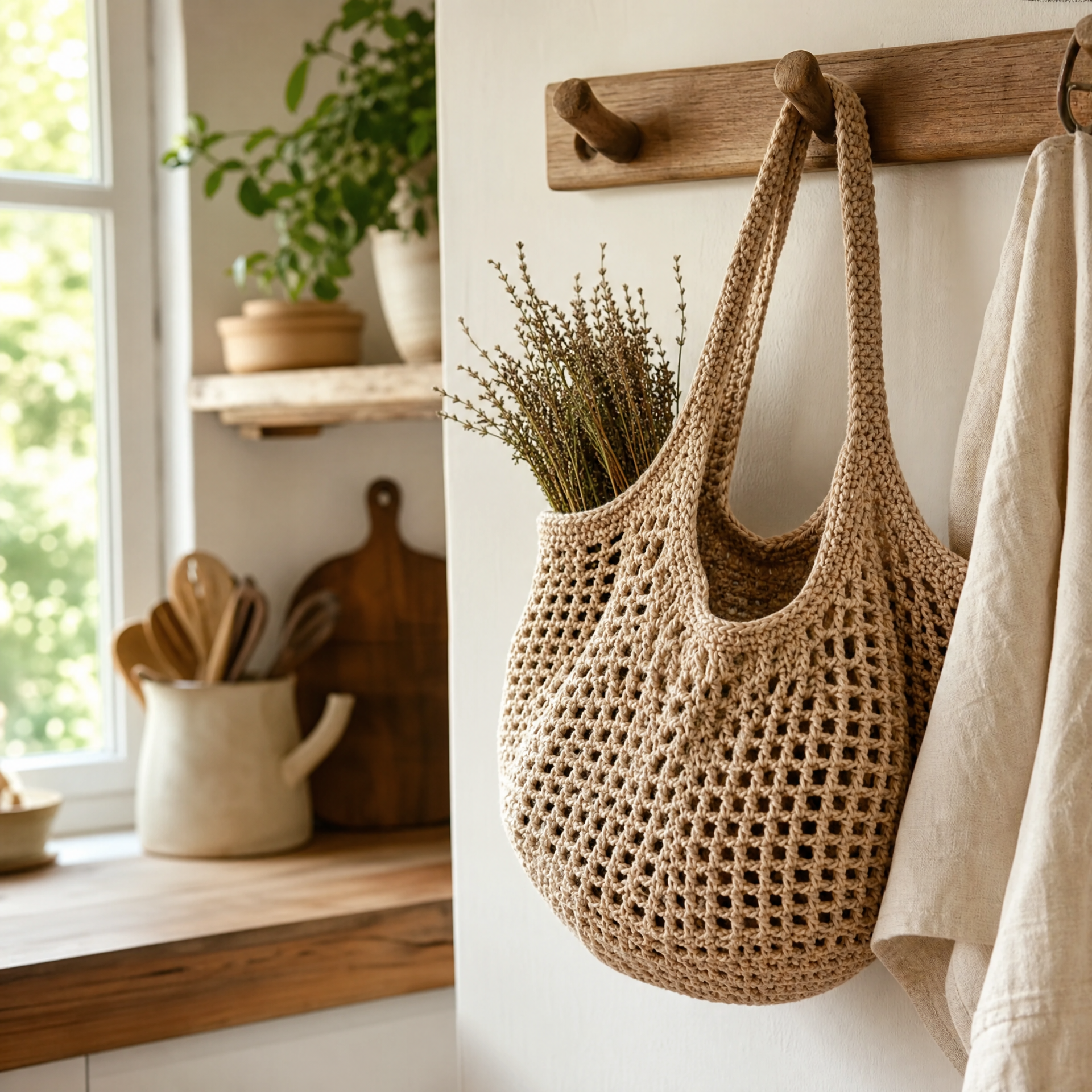
Photo prompt: A finished crochet market bag hanging on a wooden wall hook in a bright kitchen, styled with a bundle of dried herbs tucked inside and natural light coming through a nearby window.
Variations and Custom Sizing
One of the things I love most about this pattern is how easy it is to customize. Here are a few directions I have taken it.
Smaller tote bag: Start with a chain of 21 instead of 31, and work only 10 rounds of mesh instead of 14. The result is a smaller bag that is perfect for a library run or a quick trip to the farmers market for just a few items.
Larger grocery tote: Chain 41 and work 18 rounds of mesh. Add 10 extra chains to each handle. This size holds a full week of produce with ease.
Colorwork version: Swap colors every two rounds of mesh for a stripe effect. Cotton takes dye beautifully, so the colors stay crisp. I made a version in alternating terracotta and cream that looked stunning hanging in my kitchen.
Finer yarn for a more delicate look: Using a DK weight cotton (size 3) with a 4.0mm hook gives you a finer mesh that works beautifully as a gift bag or a decorative storage solution. It takes longer but the result is incredibly elegant.
Add a base lining: If you want a sturdier bottom that will not sag under weight, cut a piece of plastic canvas to fit the base rectangle and slip it inside. It stays in place without any sewing and makes the bag stand up on its own.
FAQ
Can a true beginner make this bag?
Yes, with a little patience! You will need to be comfortable with chaining, double crochet, and working in the round. If you are brand new to reading patterns, I recommend checking out my guide on how to read a crochet pattern before you start. It makes everything click into place.
How much yarn do I actually need?
For the standard size bag, plan on 200 to 250 yards of worsted weight cotton. Most worsted cotton skeins are 180 to 200 yards, so I usually grab two skeins of the same dye lot to be safe. You will likely have some left over, which is great for small accent projects.
Can I use acrylic yarn instead of cotton?
You can, but I would not recommend it for a market bag specifically. Acrylic is stretchier and tends to sag under the weight of groceries. Cotton holds its structure much better. That said, if you want a decorative bag for a gift or for holding yarn in your craft room, an acrylic version works just fine.
How do I keep the mesh rows lined up evenly?
The key is to always place your dc into the dc from the previous round, not into the chain space. It sounds simple, but it is easy to lose track when you are watching TV. Using a stitch marker at the beginning of each round helps enormously. I also find it helpful to count my ch-1 spaces at the end of every round until I get into a rhythm.
Is this bag strong enough for heavy items like books or canned goods?
For light to medium loads like produce, bread, and small household items, absolutely. For very heavy loads like canned goods or hardcover books, I would reinforce the handles by making them doubled (fold the strip and sew both layers together before attaching), and make sure your handle attachment is very secure. Cotton is a strong fiber, but the mesh structure means the bag was designed for flexibility rather than maximum load capacity.
Final Thoughts
This crochet market bag has genuinely become one of my most-made patterns. It is quick enough to finish in a weekend, useful enough to use every single week, and handsome enough that people always ask about it. I love that something so practical can also be a little piece of craft you are proud of every time you pull it out of the closet.
If you are looking for more fun cotton and home decor projects to pair with this bag, my simple granny square coasters are a wonderful companion project that uses up leftover cotton yarn beautifully.
I would love to hear how your bag turns out! Drop a comment below and let me know what color you chose, whether you made any modifications, or if you ran into any questions along the way. I read every single comment and I genuinely love seeing your finished makes. And if you want to save this pattern for later (which I highly recommend, because you will want to come back to it!), please pin it to your crochet board on Pinterest. It helps other crafters find the pattern too, and it means the world to me as a small blogger. Happy crocheting!